Tuning Polyacrylate Composition to Recognize and Modulate Fluorescent Proteins
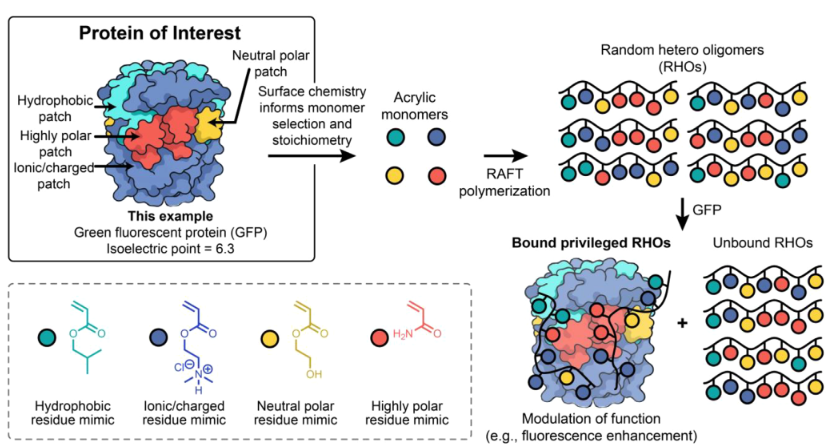
Molecular definition is usually regarded as a prerequisite to achieve protein recognition and functionalmodulation, particularly for macromolecular interactions. Herein, we report that polymers with specific combinations ofmonomers arranged into random sequences [random hetero oligomers (RHOs)] can selectively bind to a model protein.Using green fluorescent protein (GFP) as a target, polyacrylates were developed that bound with nanomolar affinity andenhanced fluorescence by >100%. Purification of the polymerization product revealed subpopulations of compositionswith distinct affinities and selectivity for GFP over a competing protein. Experimental and computational binding analysesconfirmed that there are distinct RHO–GFP interactions, which are influenced by RHO chemical composition. Thesefindings show that sequence-defined structures are not a prerequisite for selective protein recognition. Synthetic polymerscan instead serve as scalable, tunable platforms for molecular recognition—representing a significant leap towards next-generation sensing, therapeutic, responsive, and catalytic materials in domains previously dominated by biologics orcomplex peptide scaffolds.
| File Name | Description | File Type | Size | Action |
|---|---|---|---|---|
| Supplementary Information | Experimental and simulation supporting information. | DOCX | 12.23 MB | Login to Download |
| Simulation Movies | Movies on metadynamics simulations of oligomer-protein free energy landscapes. | ZIP | 43.51 MB | Login to Download |