GLDP000138
In-House Research
Characterization of heparin interactions with Clostridioides difficile toxins and its potential as anti-CDI therapeutics
Chronicle Description
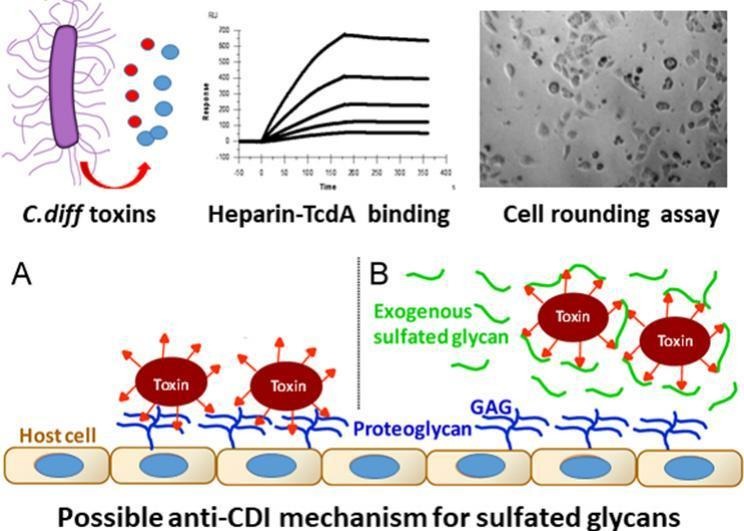
Clostridioides difficile ( C. difficile ) infection (CDI) is a life‑threatening healthcare‑associated infection occurring worldwide. C. difficile toxins (toxin A and toxin B) are the major virulence factors, causing CDI‑related diarrhea and complications. Recent studies have shown that sulfated glycosaminoglcans (GAGs) are involved in mediating the cellular entry of these toxins. Although interactions between GAGs and toxins were reported, their binding kinetics and the structure features of glycans that facilitate toxin interaction have not been thoroughly studied. This research utilized surface plasmon resonance (SPR) to directly measure the kinetics of interactions between heparin and various toxins. Both toxin A and toxin B bind to heparin with high affinity ( K D = 3.3 nM and 13.5 nM, respectively). SPR competition assay showed that both toxin A and B prefer binding to longer heparin chains and that all sulfation on the heparin chain is crucial for the heparin‑toxin interaction. Finally, an in vitro assay showed that heparin and non‑anticoagulant heparin inhibit the cell rounding caused by toxin A in HeLa cells.
Associated Publications
Fuming Zhang; Shaohui Wang; Jiyuan Yang; Keith Fraser; James M. Gibson; Chunyu Wang; Jonathan S. Dordick; Anastasia Tomatsidou; Robert J. Linhardt; Lianchun Wang; Xingmin Sun
Carbohydrate Polymers
Data Files & Attachments
No files attached to this chronicle.
Research Keywords & Tags