GLDP000150
External User Chronicle
Stimuli-Responsive Polymers at the Interface with Biology
Chronicle Description
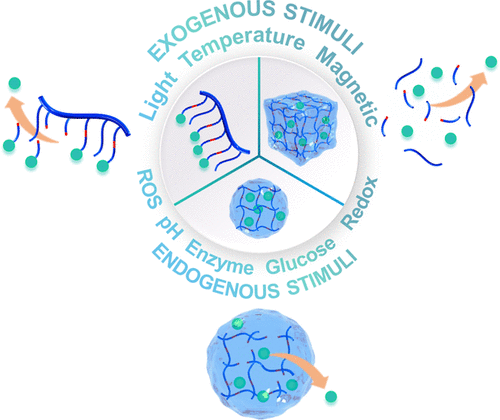
There has been growing interest in polymeric systems that break down or undergo property changes in response to stimuli. Such polymers can play important roles in biological systems, where they can be used to control the release of therapeutics, modulate imaging signals, actuate movement, or direct the growth of cells. In this Perspective, after discussing the most important stimuli relevant to biological applications, we will present a selection of recent exciting developments. The growing importance of stimuli-responsive polysaccharides will be discussed, followed by a variety of stimuli-responsive polymeric systems for the delivery of small molecule drugs and nucleic acids. Switchable polymers for the emerging area of therapeutic response measurement in theranostics will be described. Then, the diverse functions that can be achieved using hydrogels cross-linked covalently, as well as by various dynamic approaches will be presented. Finally, we will discuss some of the challenges and future perspectives for the field.
Associated Publications
Nathan R. B. Boase; Elizabeth R. Gillies; Rubayn Goh; Roxanne E. Kieltyka; John B. Matson; Fenghua Meng; Amitav Sanyal; Ondřej Sedláček
Biomacromolecules
Data Files & Attachments
No files attached to this chronicle.
Research Keywords & Tags
Related Chronicles