GLDP000136
In-House Research
Evidence of bidirectional transmembrane signaling by the sensor histidine kinase GacS from Pseudomonas aeruginosa
Chronicle Description
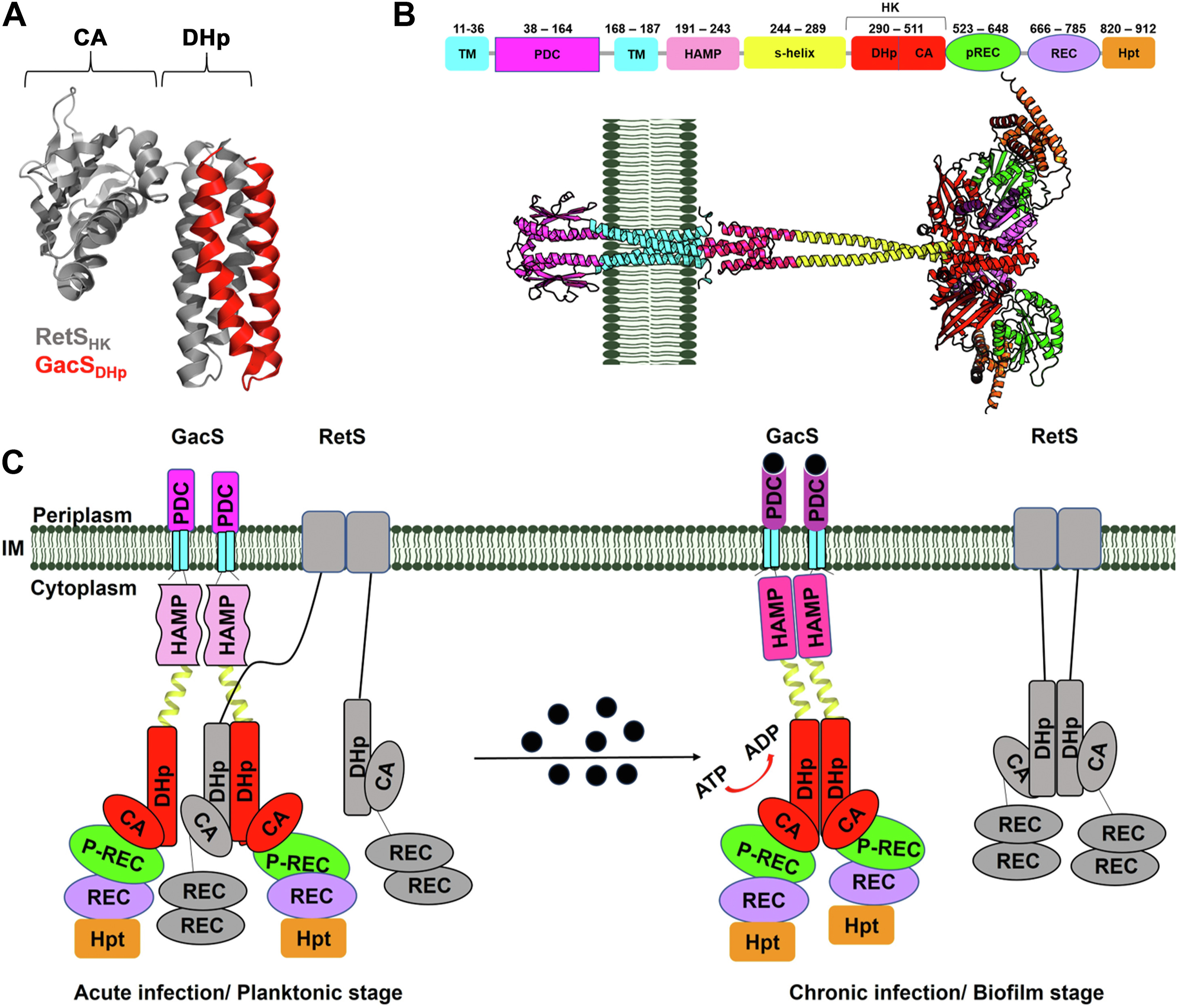
Membrane-embedded signaling histidine kinases (SKs) from two-component and phosphorelay signal transduction systems play central roles in the gene regulation of bacteria, fungi, and plants. The SK GacS is a global regulator of gene expression in the human pathogen Pseudomonas aeruginosa. The interactions between GacS and another SK, RetS, are a model for studying non-canonical crosstalk in multikinase networks. During planktonic growth, RetS inhibits GacS to upregulate expression of virulence factors associated with acute P. aeruginosa infections and repress genes linked to chronic infection. Conversely, GacS activation promotes biofilm formation and chronic infection but suppresses factors required during acute infection. Using a combination of hydrogen-deuterium exchange mass spectrometry (HDX‑MS) and mutational analysis in conjunction with functional assays, we show that binding of an extracellular ligand promotes GacS signaling through two mechanisms: (1) by increasing GacS autokinase activity and (2) by decreasing the affinity between GacS and RetS. Intriguingly, RetS binding to the intracellular histidine kinase domain of GacS also triggered conformational changes in the extracellular sensory domain of GacS. This allosteric effect was confirmed in a biochemical assay, showing RetS increases the affinity of a chimeric CitAGacS receptor for citrate by almost tenfold. This finding establishes the first precedent of inside‑out cross‑membrane signaling in SK systems. Taken together, our data are consistent with a model wherein RetS binding primes GacS for signal sensing during planktonic growth. Binding of the unknown ligand at the onset of biofilm formation causes dissociation of the RetS‑GacS complex to lock GacS in a kinase‑ON conformation.
Associated Publications
Safoura Salar; Steve Silletti; Florian D. Schubot
Journal of Biological Chemistry
Data Files & Attachments
1 File(s) Available
| File Name | Description | File Type | Size | Action |
|---|---|---|---|---|
| Supporting Information | Supporting Information | ZIP | 2.72 MB | Login to Download |
Research Keywords & Tags
Related Chronicles