GLDP000144
In-House Research
Increasing Glucose Yield from Cellulose in Ground Corn Using Plant-Made Recombinant Cellulases
Chronicle Description
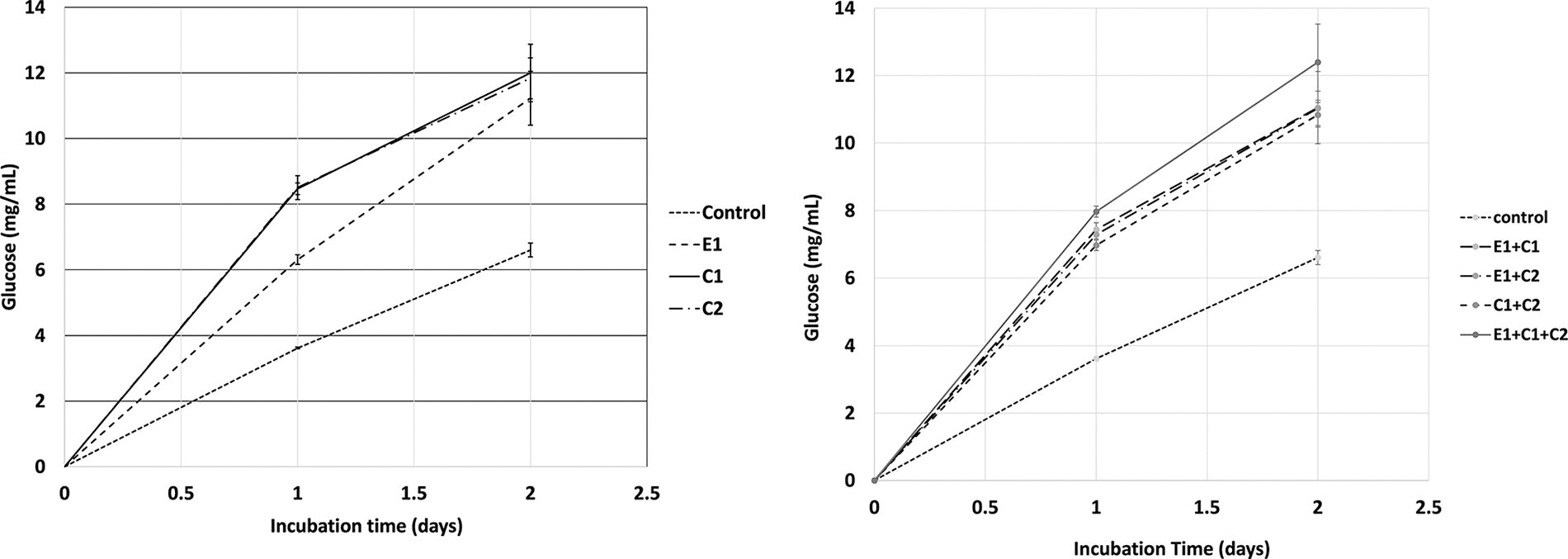
First-generation ethanol has been produced from starchderived glucose for more than 40 years. Second-generation biofuels, which utilize alternative feedstocks such as lignocellulose, offer a sustainable way to expand biofuel production. When combined, these approaches are termed ' generation 1.5, ' as they integrate biofuel production from both starch and cellulose. Whole corn is * 15% cellulose and 62% starch. The biomass remaining after dry ground corn is processed for ethanol from the starch (mash) consists primarily of 21.2% glucan, of which 16.0% is cellulose and 5.2% is starch on a dry mass basis. Further important components comprise hemicellulose at 13.5% of the dry mass as well as crude protein (24.9%) and crude oil (11.6%). Utilizing the cellulose component to gain additional glucose could signi /uniFB01 cantly improve the pro /uniFB01 t margin of corn ethanol production. In these experiments, we utilized recombinant cellulases produced in corn kernels, including an endocellulase (E1 from Acidothermus cellulolyticus ) and two exocellulases (CBH I and CBH II from Trichoderma reesei ) to release glucose from the cellulosic component. These cellulases were added to ground corn /uniFB02 our at different ratios, with the optimal ratio determined to be 1:20:5 (E1:CBH I:CBH II) based on activity units, plus an external b -glucosidase (BG), resulting in the release of 10 -16% additional glucose on a dry mass basis, near the maximum achievable. Incubation times ranged from 16 to 24 hours at 50 /C176 C, with periodic sampling conducted. The reaction was determined to be complete when the glucose content remained constant, showing no further increase. Three external BGs were tested for the reduction of short-chain oligomers to glucose. The recombinant cellulases produced in corn have a low cost of goods compared with fermentation, and a difference in the pro /uniFB01 tability of the ethanol industry is discussed.
Associated Publications
Enio R. Duque; Elizabeth E. Hood
Industrial Biotechnology
Data Files & Attachments
No files attached to this chronicle.
Research Keywords & Tags