GLDP000145
In-House Research
Applying a polysaccharide lyase from Stenotrophomonas maltophilia to disrupt alginate exopolysaccharide produced by Pseudomonas aeruginosa clinical isolates
Chronicle Description
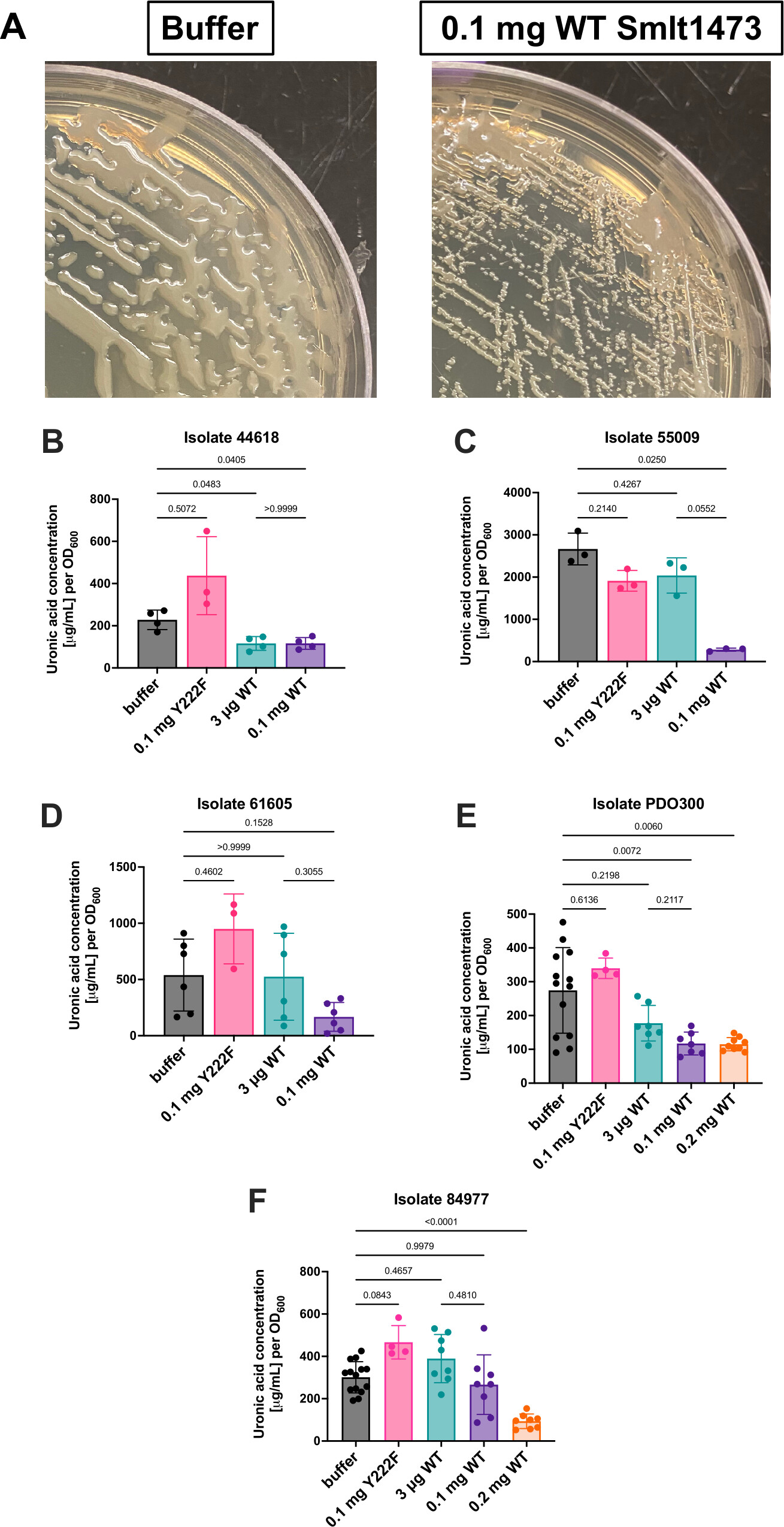
Pseudomonas aeruginosa is considered one of the most challenging, drug-resistant, opportunistic pathogens partly due to its ability to synthesize robust biofilms. Biofilm is a mixture of extracellular polymeric substances (EPS) that encapsulates microbial cells, leading to immune evasion, antibiotic resistance, and thus higher risk of infection. In the cystic fibrosis lung environment, P. aeruginosa undergoes a mucoid transition, defined by overproduction of the exopolysaccharide alginate. Alginate encapsulation results in bacterial resistance to antibiotics and the host immune system. Given its role in airway inflammation and chronic infection, alginate is an obvious target to improve treatment for P. aeruginosa infection. Previously, we demonstrated polysaccharide lyase Smlt1473 from Stenotrophomonas maltophilia strain k279a can catalyze the degradation of multiple polyuronides in vitro, including D-mannuronic acid (poly-ManA). Poly-ManA is a major constituent of P. aeruginosa alginate, suggesting that Smlt1473 could have potential application against multidrug-resistant P. aeruginosa and perhaps other microbes with related biofilm composition. In this study, we demonstrate that Smlt1473 can inhibit and degrade alginate from P. aeruginosa. Additionally, we show that tested P. aeruginosa strains are dominant in acetylated alginate and that all but one have similar M-to-G ratios. These results indicate that variation in enzyme efficacy among the isolates is not primarily due to differences in total EPS or alginate chemical composition. Overall, these results demonstrate Smlt1473 can inhibit and degrade P. aeruginosa alginate and suggest that other factors including rate of EPS production, alginate sequence/chain length, or non-EPS components may explain differences in enzyme efficacy.
Associated Publications
Samantha M. Felton; Nikki Akula; Glynis L. Kolling; Parastoo Azadi; Ian Black; Ambrish Kumar; Christian Heiss; Joseph Capobianco; Joseph Uknalis; Jason A. Papin; Bryan W. Berger
Applied and Environmental Microbiology
Data Files & Attachments
No files attached to this chronicle.
Research Keywords & Tags